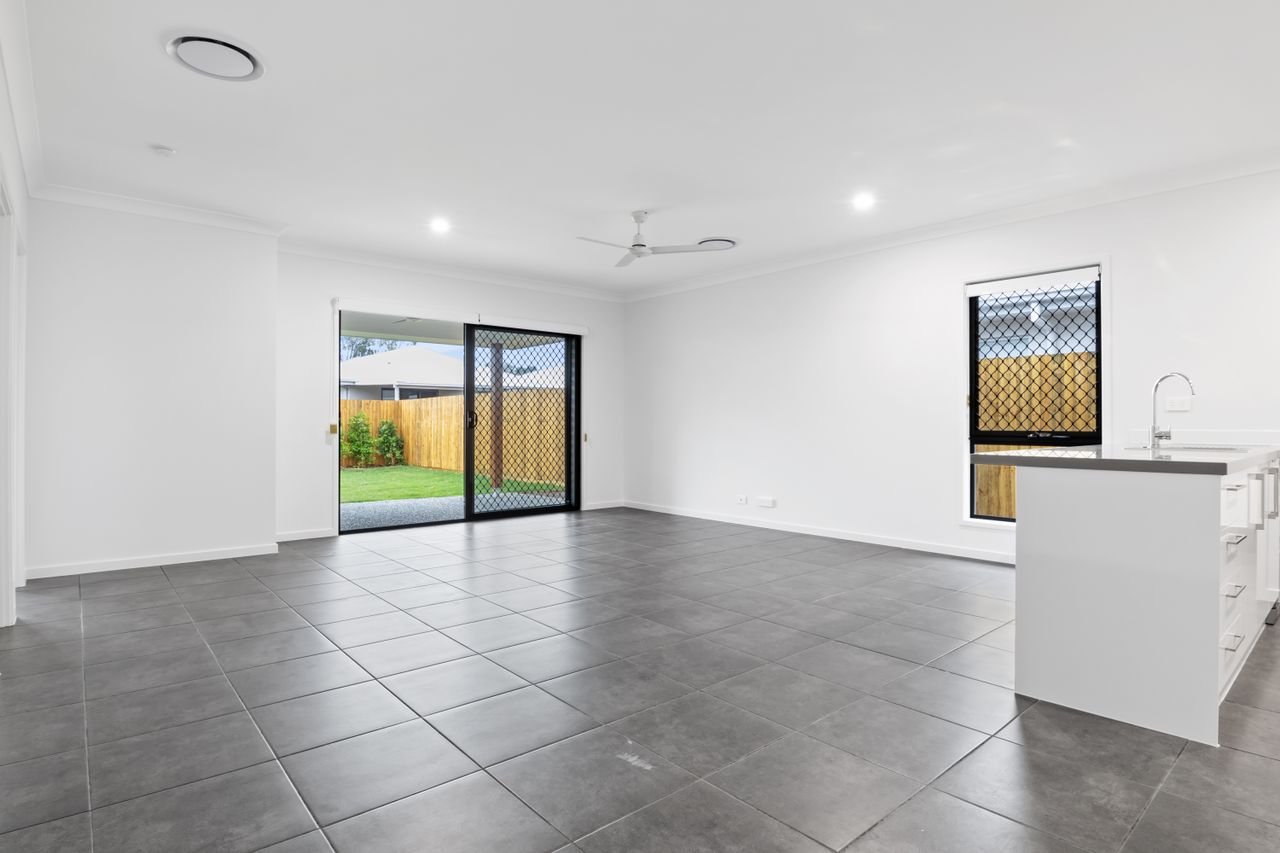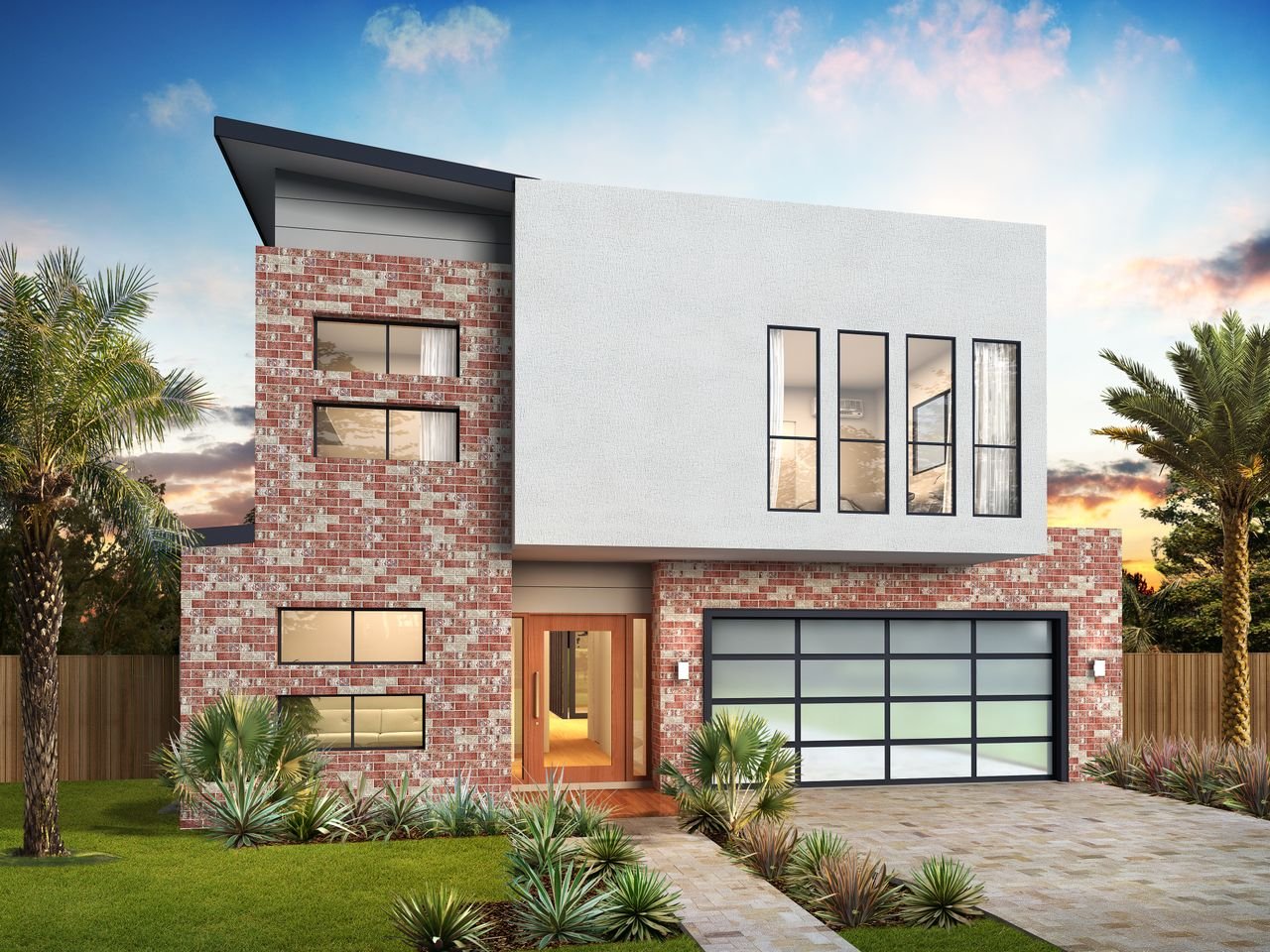

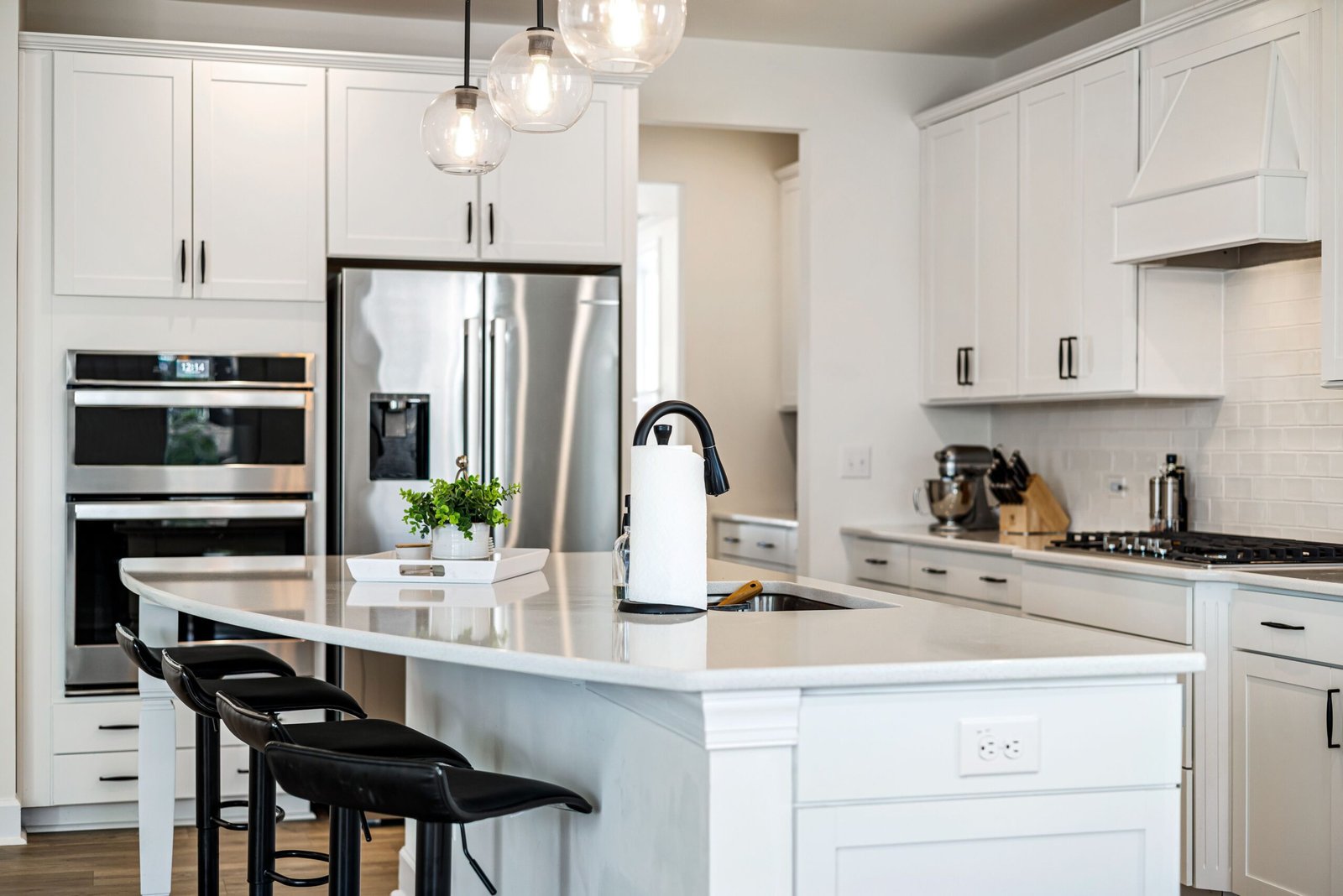
Stand in your kitchen for a moment and picture it finished. New stone benchtops catching the morning light. A layout that finally works for the way your family actually lives. A home that fits you, in the suburb you already love, instead of a “For Sale” sign on the front lawn and years of savings sunk into stamp duty and moving trucks.
That’s the decision facing thousands of homeowners across Brisbane, Ipswich, Logan and the wider South East Queensland region right now. Property prices have climbed sharply, good land is harder to find, and moving house has become an expensive, disruptive exercise. So more and more families are asking the same question: should we move, or should we improve what we’ve already got?
If you’re weighing up a kitchen renovation, a bathroom refresh, a house extension, or even building a brand-new home from the ground up, this guide is for you. We’ll walk through what’s actually happening in the South Queensland property and construction market, what separates a good renovation from a costly mistake, why your builder’s licensing matters more than most people realise, and how to plan a project that adds genuine value to your life and your property.
This is written from the perspective of **Quadrock Constructions & Development**, a QBCC Licensed Builder working across Brisbane, Ipswich, Logan and South Queensland. We’ve put together this article as a practical resource — not a sales pitch — because an informed homeowner makes better decisions, and better decisions make for better homes.
Why South Queensland Homeowners Are Investing in Renovations
South East Queensland is in the middle of one of the most significant growth periods in its history. State government population projections show the region is on track to reach around 6 million residents by 2046, an increase of roughly 2.2 million people from current levels. Brisbane City Council alone is expected to grow by 460,000 people, while Ipswich is projected to add close to 300,000 residents by 2046. Logan, Ipswich and the Gold Coast combined are forecast to add well over 600,000 new residents in the coming decades.
What does that mean for your street? Pressure. Pressure on housing supply, pressure on land prices, and pressure on established suburbs that are increasingly attractive precisely because they’re already built, already leafy, and already close to schools, transport and work. For a lot of families, that pressure is exactly why staying put and renovating makes more financial sense than trying to buy into an already competitive market.
The numbers back this up. Brisbane’s median dwelling value has pushed well past the $1 million mark, with annual growth rates among the strongest of any Australian capital in recent years. When your existing home is already sitting on land worth that much, a well-planned renovation or extension becomes a comparatively efficient way to get the space and lifestyle you want, without paying stamp duty, agent fees, and a new, higher mortgage on top.
It’s not just anecdotal, either. Renovation lending data from the Australian Bureau of Statistics shows borrowing for home improvements sitting at near-record levels — around triple pre-pandemic volumes — as households across the country choose to improve rather than move. South East Queensland, with its combination of older housing stock in premium suburbs and rapid population growth, is right at the centre of that trend.
There’s a lifestyle dimension too. A 2025 Houzz Australia survey found that 71% of homeowners now rank personal style and how well a home functions for their family as their primary renovation driver — ahead of price for the first time. Home offices, study nooks, and flexible living spaces for multi-generational households are all growing fast, reflecting how Australians actually live today rather than how homes were designed a generation ago.
For homeowners in Brisbane, Ipswich and Logan, this all adds up to a simple truth: **the home you already own is likely one of your biggest assets, and renovating it thoughtfully is one of the smartest financial and lifestyle decisions you can make right now.**
The Benefits of Working With a QBCC Licensed Builder
Queensland has some of the strictest building regulation requirements in Australia, and for good reason. The Queensland Building and Construction Commission (QBCC) exists to protect homeowners from unlicensed, underinsured, or unqualified operators — and unfortunately, there are plenty of them advertising renovation and construction work across South East Queensland.
Working with a QBCC licensed builder isn’t just a box-ticking exercise. It matters because:
Legal Compliance and Consumer Protection
Any residential construction or renovation work in Queensland valued above $3,300 legally requires a licensed contractor. A QBCC licence confirms the builder has met minimum financial, technical and experience requirements set by the state regulator. Projects over $20,000 also require Queensland Home Warranty Insurance, which protects homeowners if something goes wrong during or after construction.
Accountability and Quality Assurance
Licensed builders are bound by the Queensland Building and Construction Commission Act and the Domestic Building Contracts Act, which set out clear obligations around contracts, defects liability periods, and dispute resolution. If a problem arises, you have a formal, government-backed process to fall back on — something you simply don’t get with an unlicensed operator working for cash.
Insurance and Risk Management
A licensed builder carries public liability insurance and, where required, home warranty insurance. If an accident happens on site, or a structural issue emerges years down the track, you’re covered. This single factor is often the difference between a manageable hiccup and a financial disaster.
Access to Trusted Trade Networks
Licensed builders typically work with an established network of qualified electricians, plumbers, and specialist trades — all of whom are similarly licensed and accountable. This reduces the coordination burden on you as the homeowner and significantly lowers the risk of compliance issues at final inspection.
As a QBCC Licensed Builder, Quadrock Constructions & Development operates within all of these frameworks as standard practice — not as a marketing point, but as the baseline for doing residential construction properly in Queensland.
Kitchen Renovations That Add Value
The kitchen is, without question, the room that does the most heavy lifting in a home — both functionally and financially. It’s where families actually spend their time, and it’s consistently the single renovation category real estate agents point to as having the biggest impact on a buyer’s first impression.
What a Kitchen Renovation Actually Returns
Industry data across the Australian renovation sector consistently places kitchen renovation ROI in the **60–80% range**, meaning a well-executed, appropriately scoped kitchen renovation typically recovers 60 to 80 cents of every dollar spent in added property value — with premium suburbs and restrained, quality-finished kitchens often performing at the higher end of that range. Overcapitalising on ultra-luxury finishes in a modest suburb, on the other hand, rarely pays for itself.
That’s the logic side of the equation. The emotional side matters just as much. A kitchen isn’t just a cost-benefit spreadsheet — it’s where birthday cakes get made, where homework gets done at the bench, where your morning coffee actually tastes better because the space finally works.
Getting the Kitchen Renovation Brisbane Homeowners Actually Want
The trend in **Kitchen Remodeling Brisbane** homeowners are chasing right now leans toward:
– Open-plan layouts that connect kitchen, dining and living areas
– Stone or engineered stone benchtops for durability and resale appeal
– Butler’s pantries and scullery spaces to keep the main kitchen clutter-free
– Energy-efficient appliances that reduce running costs
– Indoor-outdoor flow, particularly for Queensland’s climate and lifestyle
A good builder won’t just install cabinetry — they’ll help you sequence the plumbing, electrical, waterproofing and structural work correctly, in the right order, with council approvals handled properly where required. That sequencing is where most DIY-managed renovations go wrong, and it’s where an experienced project manager earns their fee many times over.
Bathroom Renovations That Transform Daily Living
Bathrooms are unforgiving spaces. Get the waterproofing wrong and you’re not looking at a cosmetic issue — you’re looking at structural damage, mould, and a far more expensive fix down the track. This is one area where cutting corners costs homeowners dearly.
Done properly, bathroom renovations typically deliver an ROI in the **60–75% range**, and unlike kitchens, they tend to be more forgiving of budget because the footprint is smaller and the finishes-to-labour ratio is different. A well-planned ensuite or family bathroom refresh is also one of the fastest ways to lift the everyday comfort of a home — which is exactly why it ranks alongside kitchens as one of the two highest-return renovation categories in the country.
Key considerations for a bathroom renovation include:
– **Waterproofing compliance** to Australian Standard AS 3740, which is non-negotiable and inspected at certification stage
– **Ventilation** to manage Queensland’s humidity and prevent mould
– **Layout efficiency**, particularly in older Queenslander and post-war homes where bathrooms are often small and awkwardly positioned
– **Accessibility features**, increasingly popular as families plan for ageing in place
A licensed builder will manage the waterproofing certification, tiling standards and plumbing compliance as part of the build — protecting you from the kind of hidden defects that only surface (often expensively) years later.
House Extensions vs Moving House
This is the calculation almost every growing family in Brisbane, Ipswich and Logan eventually runs: extend, or move?
The Case for Extending
– **No stamp duty.** On a $1 million-plus Brisbane property, stamp duty alone can run into the tens of thousands of dollars — money that goes nowhere near your actual living space.
– **No agent fees or moving costs**, which typically add another significant chunk to the cost of relocating.
– **You keep your suburb, your school catchment, and your neighbours.** For families with kids settled in local schools, this isn’t a small thing — it’s often the deciding factor.
– **You control the outcome.** Rather than compromising on someone else’s floor plan, you design the extra bedroom, second living area, or home office exactly the way your family needs it.
The Case for Moving
– If your block simply can’t accommodate the extension you need (due to setbacks, easements, or slope), moving may be unavoidable.
– Some older homes have structural or foundation issues that make extending cost-prohibitive relative to the value it adds.
– If you need a fundamentally different location — closer to a new job, a different school catchment — no extension solves that.
For the majority of homeowners in established South East Queensland suburbs, particularly in Brisbane’s inner and middle rings, extending wins the cost-benefit comparison comfortably once stamp duty and transaction costs are factored in. A second storey addition, rear extension, or granny flat conversion can add both livable space and resale value, particularly as SEQ’s population growth continues to push demand for larger, more flexible homes in established suburbs.
New Home Construction: Building Your Dream Home
For some homeowners and landowners, the right answer isn’t renovating an existing property — it’s building new. Whether you’ve secured a block in a growth corridor or you’re planning a knockdown-rebuild on an established lot, new home construction gives you complete control over layout, orientation, energy efficiency and finish quality from the ground up.
Building new in Queensland means navigating:
– **QBCC compliance** at every stage, from contract through to final handover
National Construction Code (NCC) requirements, including Queensland-specific climate provisions for cyclone regions and bushfire-prone areas where relevant
Energy efficiency standards, which have tightened significantly under the NCC 2022 provisions now applying nationally
Council development approvals, which vary meaningfully between Brisbane City Council, Ipswich City Council and Logan City Council
A dream home isn’t just about the finishes you choose — it’s about a build process that’s transparent, well-sequenced, and managed by someone who understands the compliance landscape in your specific council area. This is where local knowledge genuinely changes outcomes, not just costs.
Property Development Opportunities in South Queensland
With SEQ’s population set to grow by more than two million people over coming decades, and Ipswich, Logan and the Gold Coast forecast to absorb a substantial share of that growth, well-located land in South East Queensland continues to represent a compelling long-term development opportunity.
For landowners and investors considering subdivision, dual-occupancy builds, or small-scale residential development, the fundamentals are worth understanding:
Dwelling supply is not keeping pace with population growth across most SEQ local government areas, a gap regional planning authorities have flagged repeatedly.
– **Infrastructure investment is accelerating**, partly driven by the lead-up to the 2032 Brisbane Olympic and Paralympic Games, improving transport connectivity to growth corridors.
Council planning schemes differ meaningfully between Brisbane, Ipswich and Logan, which affects everything from minimum lot sizes to dual-occupancy approvals — local knowledge here isn’t optional, it’s essential.
Property development is a longer, more complex process than a renovation or single new build, and it benefits enormously from working with a builder who understands both the construction and the regulatory side of the equation from the outset — not one brought in only once council approvals are already sorted.
Common Construction Mistakes Homeowners Make
After years of project management across Brisbane, Ipswich and Logan, certain mistakes come up again and again. Avoiding them is often the single biggest factor separating a smooth renovation from a stressful one.
1. Hiring based on price alone. The cheapest quote is frequently cheap because it excludes scope that gets added back as “variations” later — often at a premium.
2. Skipping the licence check. Always verify a builder’s QBCC licence status directly through the QBCC’s public register before signing anything.
3. Underestimating timelines. Weather delays, material lead times, and council inspection scheduling all affect the program — a realistic builder will factor this in upfront rather than promising unrealistic dates.
4. Not budgeting a contingency. Industry best practice is to hold back 10–15% of your budget for unforeseen issues, particularly in older homes where wall cavities and subfloors can hide surprises.
5. Overcapitalising for the suburb. Spending premium-suburb money on finishes in a mid-range suburb rarely returns dollar-for-dollar value at resale.
6. Poor sequencing of trades. Waterproofing, electrical rough-in, and structural work need to happen in the correct order — get this wrong and you’re paying twice.
7. Ignoring the contract details. A proper Domestic Building Contract, compliant with Queensland’s Domestic Building Contracts Act, protects both parties. Verbal agreements do not.
How Quadrock Delivers Quality Construction Outcomes
Quadrock Constructions & Development was built around a simple idea: construction should be genuinely client-focused, from the first conversation through to the final handover.
That looks like:
QBCC licensed building services across every project type, giving homeowners the legal protection and accountability that comes with proper licensing
Transparent, detailed contracts that set out scope, cost and timeline clearly upfront — no vague allowances designed to blow out later
Personalised project management, with a single point of contact who understands your project rather than a rotating cast of subcontractors
Local trade networks built over years of working specifically within Brisbane, Ipswich and Logan council areas
Expert craftsmanship across kitchens, bathrooms, extensions, new builds and property development, backed by genuine attention to finish quality
Honest communication, including realistic timelines and proactive updates rather than surprises at the end
For homeowners, the value of this approach isn’t abstract — it’s a renovation or build that gets delivered close to on-time and on-budget, with the stress of project management taken off your plate so you can focus on the part that actually matters: watching your home become what you always wanted it to be.
Why Local Knowledge Matters in Brisbane, Ipswich and Logan
Not all South East Queensland suburbs are the same, and a builder who treats them that way will eventually get something wrong.
– **Brisbane** has a huge proportion of older Queenslander homes, particularly in inner and middle-ring suburbs, which come with their own considerations around stumping, underfloor ventilation, and heritage overlays in certain precincts.
– **Ipswich** is one of the fastest-growing council areas in the country, with a mix of established character homes and large-scale new estates, each requiring a different regulatory approach.
– **Logan** sits at the crossroads of rapid population growth and a diverse housing mix, from post-war brick homes to newer builds, with council approval processes that differ from its neighbours.
A builder working across all three needs genuine, current familiarity with each council’s planning scheme, inspection processes and common site conditions — not a generic, one-size-fits-all approach. This is precisely why local knowledge is one of the most underrated factors homeowners should weigh when choosing a **South Queensland builder**: it directly affects how smoothly your approvals, inspections and final certification go.
For homeowners specifically searching for a **Logan Builder**, this local specificity matters even more, given how much Logan’s mix of housing stock and council requirements differs from neighbouring Brisbane and Ipswich.
Frequently Asked Questions
1. How do I check if a builder is QBCC licensed in Queensland?
You can verify any builder’s licence status for free through the QBCC’s online licence search on their official website. Always check this before signing a contract — an active licence confirms the builder meets Queensland’s financial, technical and experience requirements.
2. How much does a kitchen renovation cost in Brisbane?
Kitchen renovation costs in Brisbane vary widely depending on scope, but mid-range renovations commonly fall between $25,000 and $50,000, with premium or larger kitchens exceeding this. Getting a detailed, itemised quote from a licensed builder is the only reliable way to budget accurately for your specific home.
3. Is it better to renovate or move house in South East Queensland?
For many homeowners in established Brisbane, Ipswich and Logan suburbs, renovating is more cost-effective once stamp duty, agent fees and moving costs are factored in — particularly if the existing location, school catchment and land value are already strong.
4. What is the ROI on a kitchen renovation in Australia?
Industry data typically places kitchen renovation ROI in the 60–80% range, meaning a well-scoped renovation recovers a substantial majority of its cost in added property value, with restrained, quality finishes generally outperforming overcapitalised luxury fit-outs in mid-range suburbs.
5. Do I need council approval for a house extension in Brisbane, Ipswich or Logan?
In most cases, yes — though requirements vary by council and by the scale and nature of the extension. A licensed builder experienced in your specific council area can advise whether your project needs development approval or can proceed under accepted development provisions.
6. How long does a full home extension take?
Most house extensions in South East Queensland take between four and nine months from design through to completion, depending on scope, council approval timelines, and weather. Your builder should provide a realistic program upfront rather than an optimistic best-case estimate.
7. What’s the difference between a licensed builder and an unlicensed operator?
A licensed builder has met QBCC’s financial, technical and experience requirements, carries appropriate insurance, and is bound by Queensland’s building contract laws. An unlicensed operator offers none of these protections, leaving homeowners financially exposed if something goes wrong.
8. How much value does a bathroom renovation add to a home?
Bathroom renovations typically return 60–75% of their cost in added property value, making them one of the two highest-ROI renovation categories in Australia alongside kitchens.
9. What should be included in a building contract in Queensland?
A compliant Domestic Building Contract should include detailed scope of works, itemised costs, payment stages, defects liability provisions, and a realistic timeline. Queensland’s Domestic Building Contracts Act sets minimum requirements for contracts over $3,300.
10. Why is Brisbane’s property market growing so quickly?
Brisbane’s property market has grown strongly in recent years, driven by interstate migration, constrained housing supply, and infrastructure investment linked to South East Queensland’s population growth and the lead-up to the 2032 Olympic and Paralympic Games.
11. Is now a good time to renovate in South East Queensland?
With renovation lending running at near-record levels nationally and Brisbane property values continuing to climb, many homeowners are finding that renovating their existing home is a financially sound way to build equity without entering a competitive buyer’s market.
12. What’s the best home renovation builder in Brisbane look like on paper?
The best home renovation builder in Brisbane will hold an active QBCC licence, carry appropriate insurance, provide a detailed written contract, offer clear communication and project management, and have a demonstrated local track record across your specific suburb or council area.
13. Can I live in my home during a renovation?
It depends on the scope. Kitchen and bathroom renovations often allow homeowners to remain on site with some disruption, while major extensions or structural work may require temporary relocation for parts of the project. A good builder will walk you through this during planning.
14. What is property development, and is it different from home building?
Property development typically refers to larger-scale projects such as subdivisions, dual-occupancy builds, or multi-lot developments, which involve additional planning, approval and feasibility steps beyond a single home build or renovation.
15. How do I get a quote from Quadrock Constructions & Development?
You can contact Quadrock directly to arrange an initial consultation, where your project scope, budget and timeline will be discussed before a detailed, itemised quote is prepared.
Final Thoughts: Building With Confidence in South Queensland
South East Queensland is growing faster than almost anywhere else in the country, and that growth is reshaping how homeowners think about their properties — not just as places to live, but as assets worth investing in thoughtfully. Whether that means a kitchen that finally works for your family, a bathroom that feels like a retreat rather than a chore, an extension that lets you stay in the suburb you love, or a brand-new home built exactly to your brief, the fundamentals are the same: work with a properly licensed builder, understand the numbers, and plan for the long term.
A renovation or build is one of the biggest financial and emotional investments most families will make. It deserves a builder who treats it that way — with proper licensing, transparent communication, and genuine local knowledge of Brisbane, Ipswich and Logan.
**Ready to talk through your project?** Quadrock Constructions & Development is a QBCC Licensed Builder serving homeowners across Brisbane, Ipswich, Logan and South Queensland. Get in touch today for an obligation-free consultation and find out what your home could become.